Monday scorecard
Twenty minutes. Five numbers. One problem for the week.
From Pilothouse
A 20-minute Monday so the same problem cannot hide twice.
A Monday scorecard, an exception log, and 12 written ways of working. Installed in 14 days. For shops already shipping and for people writing how the shop will run before the first order. No consultant. No warehouse software.
Instant download. Word, Excel, and a calendar you can add on your phone. No login.

Twenty minutes. Five numbers. One problem for the week.
A simple list of fires that stole more than 15 minutes.
SOP means the written steps for one job. Receiving through Friday close. Word files that open in Pages.
Scorecard, exceptions, and vendor chase in Excel or Numbers.
A file you add on iPhone or Outlook so the install actually happens.
Optional. Use them if you want a first draft of a new SOP.
Included free
The kit builds a weekly rhythm. This extra is for today. Ready-to-send buyer notes, a one-page cover sheet for when you cannot open the shop, a carrier claim list, and a reorder planner that does the simple math.
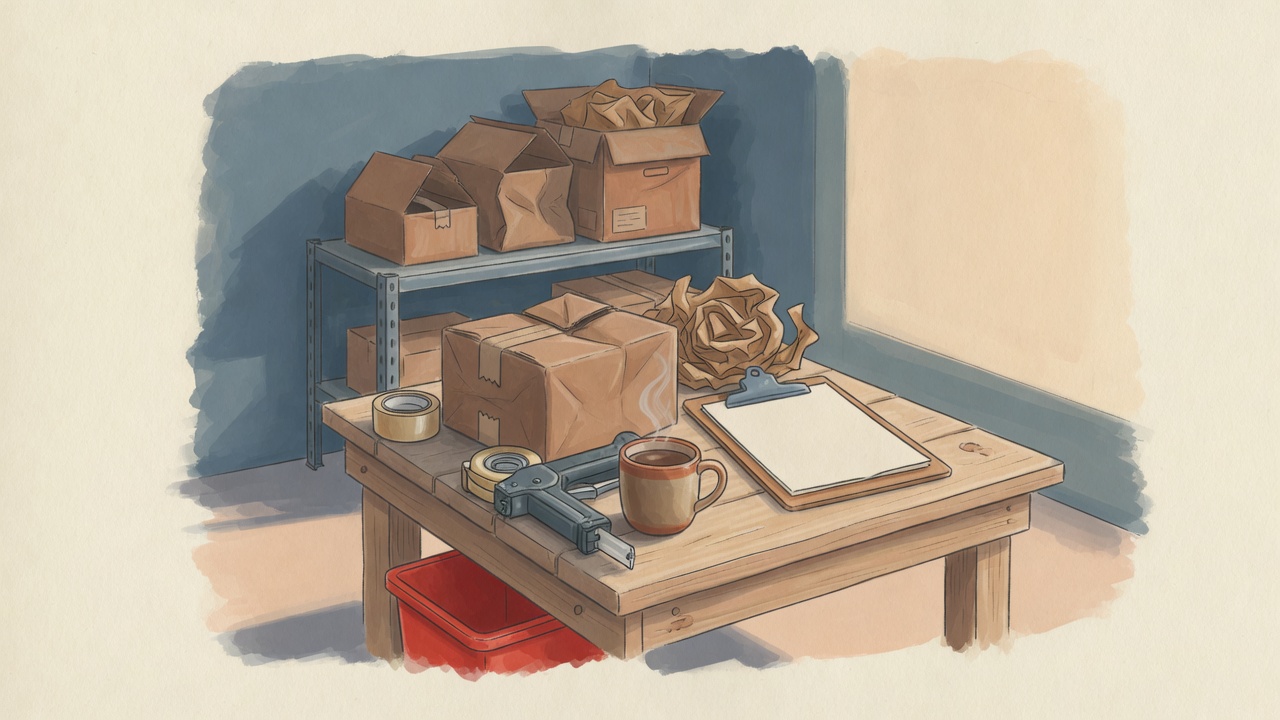
This is the critical part of a new business start that nobody writes down. How a carton comes in. How an order goes out. What you do when a buyer sends something back. Most people wait until something breaks. By then the only person who knows the work is you, and you are also packing, answering buyers, and chasing the vendor.
Use the 14-day calendar while the shop is still quiet. Publish those three ways of working before the first rush. Monday stays 20 minutes from week one, even if some lines are NA. The kit will not form an LLC or get you a loan. It will give the shop a way to run when you hire the first helper.

Short pages. Same voice as the kit. Share these, not the checkout link.
Six numbers, or NA. One problem. Then back to the floor.
Ask for a date, not a status. Then name a cancel date.
Match the purchase order. Count. Photograph a mismatch.
A code before the bin. Tell the buyer once.
Write how the shop will run while it is still quiet.
The full list, with pictures, on one page.
01
Stand up the scorecard and the exception log. Circle the leak that shows up most.
02
Receiving, returns, and vendor chase. One owner. One done line.
03
Twenty minutes before noon. Numbers first. One problem. Then back to the floor.
Short forms, said in plain English.
Standard operating procedure. The written steps for one job, such as receiving a carton.
Stock keeping unit. The code for one sellable item, like the blue 12 ounce mug.
Purchase order. The order you send a vendor when you buy stock.
Third party logistics. An outside warehouse that picks, packs, and ships for you.
Return merchandise authorization. The number you give a return so you can find it later.
Quality assurance. A check that a listing or a job is right before it goes live.
Write hello@pilothouseco.com. If a page is confusing or a step does not match a real shop, we want that note.
When we update the kit, we send the new files to everyone who already bought. You do not pay again.
No sales mail. No weekly tips. We write only when the kit got better, or to answer you.
Yes, if you run a small shop yourself. It is a weekly habit for the person who owns the place and still packs boxes. It is not mentoring, and it is not help for trucking owner-operators.
This is the right time, and for a new business start it is the critical time. Write receiving, packing, returns, and Monday before the first rush so the work does not live only in your head. It will not form an LLC or get you a loan. It will give the shop a way to run when you hire the first helper.
The same fire every week. Late vendors, returns with no reason, listings that say in stock when the bin is empty. You get a Monday meeting that ends and written steps so the leak cannot hide.
No. Word, Excel or Numbers, and a calendar file. If you already have a warehouse system people actually use, you do not need this kit.
For the owner-operator of a small shop, including you if the shop is still on paper. One to ten people. Shopify, Amazon, eBay, wholesale, or a mix. Process lives in the inbox, in group chat, and in people’s heads. You do not want a warehouse system. You want Monday to mean something from week one.